Finding the best pull-up bars for balance training means looking beyond maximum load. Stability, grip options, adjustability, and the ability to support controlled movement all matter when you are building balance, body control, and upper-body strength at home.
This roundup compares 10 options across freestanding power towers, stall bars, dip stations, doorway bars, and wall-mounted designs so you can match the equipment to your space, training style, and setup requirements.
Best 10 Pull Up Bars for Balance Training Picks for 2026
Best Foldable Power Tower
Multi-Function Assisted Pull-Up Station

- Stable triangular steel frame with up to 400-pound capacity
- 11 height settings and a spacious 24-inch interior
- Includes an 88-pound assistance band and folds for storage
Best For: Home users seeking assisted pull-ups, dips, and adjustable strength training
Best Swedish Ladder Setup
Wooden Stall Bar with Pull-Up and Dip Attachments

- Nine rungs support stretching and varied body positions
- Includes pull-up and dip attachments
- Wall-mounted design saves floor space
Best For: Mobility, core, stretching, and pull-up training in a dedicated wall setup
Best Doorway Pull-Up Bar
Multi-Grip Foldable Bar with Straps

- Fits doorways from 21.65 to 36.22 inches wide
- Multiple grips plus included suspension straps
- Folds for storage and supports up to 440 pounds
Best For: Compact home gyms needing versatile doorway-based upper-body training
Best Adjustable Parallettes
Stable Dip and Parallel Bar Station

- Safety connector and non-slip sleeves support stability
- Four height and four width adjustments
- 400-pound capacity with portable stackable design
Best For: Adjustable dips, calisthenics, core work, and balance-focused training
Best Multi-Grip Option
ProsourceFit Multi-Use Pull-Up Bar

- 12 grips for varied hand positions
- Fits 24- to 36-inch doorways
- Supports up to 300 pounds
Best For: Portable, varied doorway workouts
Best Adjustable Doorway Bar
leikefitness Adjustable Pull-Up Bar
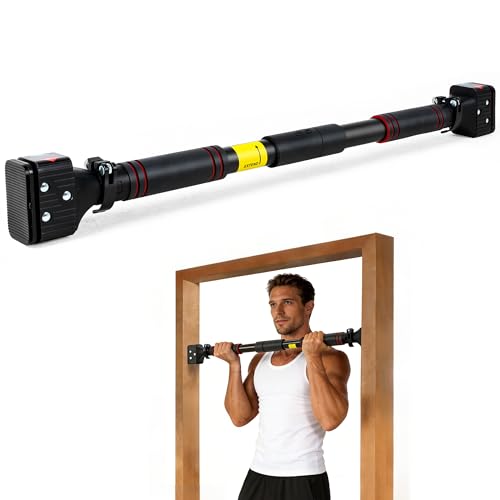
- Fits 28.3- to 37.8-inch door frames
- 330-pound maximum weight recommendation
- Anti-skid door-frame protection
Best For: Adjustable home doorway training
Best Freestanding Balance Station

- 400-pound support capacity
- Adjustable feet, height, and spacing
- Supports dips, L-sits, and handstands
Best For: Freestanding balance and calisthenics training
Best Doorway Pick
Ally Peaks Multi-Grip Pull-Up Bar

- 440-pound stated capacity and thickened steel frame
- Multiple grips plus included resistance-band accessories
- Silicone door-frame protection for portable use
Best For: Versatile doorway workouts with pull-up, core, and balance-training options
Best Freestanding Station

- Eight adjustable height levels for shared use
- Combines pull-ups and dips in one station
- 330-pound stated capacity with widened base
Best For: Full-body home workouts where floor space and assembly are acceptable
Best for Balance Workouts

- Includes adjustable suspension straps for balance training
- Fixed frame supports pull-ups, hangs, and leg raises
- 500-pound stated capacity with reinforced steel plates
Best For: Wall-mounted full-body, core, and suspension balance workouts
Best Foldable Power Tower – Multi-Function Assisted Pull-Up Station
For shoppers comparing pull up bars for balance training, this freestanding power tower combines a triangular base with adjustable height, dip functionality, and an assistance band. Its open exercise area and foldable design make it a practical option for varied home workouts.
Best For: Home users who want assisted pull-ups, dips, and adjustable full-body strength training in a foldable station.
Pros:
- Triangular steel design supports stability, with a stated capacity of up to 400 pounds.
- Eleven height settings adjust from 68.9 to 82.68 inches.
- Includes an 88-pound assistance band to help users progress toward unassisted pull-ups.
- Folds for storage and provides a 24-inch interior exercise width.
Cons:
- The freestanding frame has a larger footprint during use than a doorway bar.
- Assembly and storage require space for a tall tower.
This is a versatile choice if stability and progression matter more than minimal size. The adjustable height, dip station, and assistance band make it suitable for a range of experience levels.
Best Swedish Ladder Setup – Wooden Stall Bar with Pull-Up and Dip Attachments
This wall-mounted Swedish ladder is a strong contender among pull up bars for balance training because it supports stretching, core work, and body-position exercises alongside pull-ups and dips. Its nine graduated rungs provide multiple hand and foot positions for varied training.
Best For: Users who want a wall-mounted mobility, stretching, core-training, and pull-up system.
Pros:
- Nine solid wood rungs range from 11 to 78 inches for different heights and exercises.
- Includes pull-up and dip bar attachments.
- Wall-mounted format helps maximize available floor space.
- Wooden grips are polished and finished with water-based paint.
Cons:
- Wall installation is required.
- The stated maximum weight capacity is 265 pounds, lower than several freestanding alternatives.
- It is less portable once mounted.
Choose this setup when balance, mobility, and stretching are as important as upper-body strength. Its fixed wall design offers a dedicated training structure, but installation and the lower weight rating should be considered first.
Best Doorway Pull-Up Bar – Multi-Grip Foldable Bar with Straps
For compact pull up bars for balance training, this doorway-mounted model offers several grip positions, suspension straps, and a foldable design. Its adjustable fit accommodates doorways from 21.65 to 36.22 inches wide, subject to the stated frame requirements.
Best For: Space-conscious users who want varied upper-body exercises without installing a permanent wall-mounted bar.
Pros:
- Multiple grip options include shoulder-width, close, and angled grips.
- Foldable construction stores quickly after training.
- Includes suspension straps for additional exercise variety.
- Supports up to 440 pounds when used with a suitable, sound doorframe.
Cons:
- Fit depends on doorway width, depth, trim height, and frame condition.
- Not suitable for hollow plasterboard walls.
- Doorway-mounted equipment may be less versatile for lower-body and freestanding balance work.
This bar is a convenient choice for apartments and compact home gyms, especially when different hand positions are useful. Measure the doorway carefully and verify that the frame can handle the load and exercise stress before buying.
Best Adjustable Parallettes – Stable Dip and Parallel Bar Station
These adjustable parallel bars suit shoppers looking beyond conventional pull up bars for balance training. The independent dip stations support dips, push-ups, leg raises, stretches, and other calisthenics movements while allowing four height and four width adjustments.
Best For: Calisthenics, dip, core, and balance-focused training that benefits from adjustable parallel bars.
Pros:
- A bottom safety connection bar and non-slip foot sleeves improve stability.
- Two-millimeter-thickened steel supports up to 400 pounds.
- Four height and four width settings allow a more personalized setup.
- Compact, stackable, and portable for indoor or outdoor use.
Cons:
- This is a parallel-bar station rather than a traditional overhead pull-up bar.
- Simple assembly is required.
- Its lower training height may not suit users specifically seeking full-range hanging pull-ups.
This station is best viewed as a stable complement to pull-up equipment, particularly for dips, support holds, leg raises, and balance-oriented calisthenics. Its adjustability and portability make it flexible for shared or changing workout spaces.
Best Multi-Grip Option – ProsourceFit Multi-Use Pull-Up Bar
ProsourceFit Multi-Grip Chin-Up/Pull-Up Bar, Heavy Duty Doorway Trainer for Home Gym
Check Price On AmazonFor shoppers comparing pull up bars for balance training, the ProsourceFit stands out for its variety of hand positions and exercises. Its slip-in doorway design fits standard 24- to 36-inch doorways, while the steel construction supports up to 300 pounds.
Best For: Home users who want one portable doorway bar for pull-ups, dips, push-ups, sit-ups, and leg raises.
Pros:
- Offers 12 grips for wide, hammer, and close-grip exercises.
- Supports multiple upper-body and core movements.
- Fits doorways up to 36 inches wide and 6 inches thick.
- Includes optional foam covers and a limited lifetime warranty.
Cons:
- Doorway installation limits placement compared with freestanding equipment.
- The 300-pound capacity may not suit every user.
This is a flexible choice when hand-position variety matters for controlled strength and balance work. Verify your doorway dimensions before purchasing.
Best Adjustable Doorway Bar – leikefitness Adjustable Pull-Up Bar
The leikefitness adjustable bar is a compact option for pull up bars for balance training, especially when doorway width is a deciding factor. It adjusts from 28.3 to 37.8 inches and uses a locking mechanism with anti-skid protection for a more secure fit.
Best For: Users seeking a lightweight, adjustable doorway bar for pull-ups, chin-ups, push-ups, dips, and core exercises.
Pros:
- Adjusts to fit many door frames from 28.3 to 37.8 inches.
- Lightweight alloy-steel design weighs 3.6 pounds.
- Anti-skid devices help protect the door frame from marks.
- Rated for up to 330 pounds.
Cons:
- Installation requires two screws.
- The locking direction must be followed correctly during setup.
Its adjustable width and relatively light weight make it convenient for home use, but careful installation is important. Confirm your doorway measurements and follow the marked rotation direction.
Best Freestanding Balance Station – RELIFE Adjustable Dip Bar
For balance-focused strength work beyond a doorway bar, the RELIFE dip station provides a freestanding platform for dips, push-ups, L-sits, V-sits, handstands, and other bodyweight movements. Its adjustable feet, height, and handle spacing support a more customizable setup.
Best For: Users who want a stable, adjustable station for balance drills, calisthenics, dips, and upper-body training.
Pros:
- Heavy-duty steel frame supports up to 400 pounds.
- Adjustable rubber feet help balance the base on uneven ground.
- Four height settings range from 30.7 to 35.04 inches.
- Handle spacing adjusts from 20.08 to 26.77 inches.
Cons:
- Requires self-assembly.
- Takes more floor space than a doorway-mounted bar.
- It is a dip station rather than a traditional overhead pull-up bar.
This is the most suitable option here for users prioritizing balance, stability, and adjustable bodyweight positioning. Its freestanding design offers versatility, but plan for dedicated floor space.
Best Doorway Pick – Ally Peaks Multi-Grip Pull-Up Bar
For shoppers comparing pull up bars for balance training, the Ally Peaks is a practical doorway option with multiple grip positions and included resistance bands. Its compact, portable design supports pull-ups, push-ups, dips, and hanging crunches without taking up floor space.
Best For: Adults seeking a versatile doorway bar for upper-body and core workouts in a home or office.
Pros:
- Thickened steel construction with a stated 440-pound maximum weight recommendation.
- Multiple grip positions with comfortable, anti-slip foam-covered handles.
- Includes resistance bands, handles, and a door anchor for added exercise variety.
- Double silicone protection is designed to help prevent marks on the door frame.
Cons:
- Fits door frames in the specified 5.5- to 8.7-inch range, so compatibility should be checked first.
- Doorway installation requires confirming the bar is securely seated before use.
The Ally Peaks stands out when you want a portable doorway station rather than a permanent setup. The added bands broaden its balance and core-training potential, while the adjustable design and silicone protection address common doorway-bar concerns.
Best Freestanding Station – DONIUZ Adjustable Power Tower
For pull up bars for balance training that provide more than a single bar, the DONIUZ Power Tower combines pull-ups and dips in a freestanding home-gym frame. Its adjustable height and widened base make it suitable for shared household use on an appropriate flat surface.
Best For: Families or users who want a height-adjustable station for full-body strength workouts.
Pros:
- Eight height settings accommodate users from approximately 70.07 to 82.7 inches.
- Combines a pull-up bar and dip station for broader upper-body training.
- Widened, splayed base and adjustable suction cups are designed to improve stability.
- Supports a stated maximum weight of 330 pounds.
Cons:
- Assembly is required, including retightening screws after installation.
- The manufacturer recommends a flat concrete floor rather than carpet for the suction cups.
- Its freestanding footprint is less space-efficient than a doorway or wall-mounted bar.
This power tower is the most substantial choice of the three for users who want dips and adjustable positioning in addition to pull-ups. It is a better fit for a dedicated workout area than for compact rooms or carpeted floors.
Best for Balance Workouts – Wall-Mounted Carbon Steel Bar
Among pull up bars for balance training, this wall-mounted model is the most specialized because it includes adjustable suspension straps. The fixed carbon-steel frame supports pull-ups, chin-ups, dead hangs, and leg raises, while the straps add rows, squats, lunges, core work, balance drills, and stretching.
Best For: Users with a suitable wall who want to combine pull-up exercises with suspension-based balance and core training.
Pros:
- Welded carbon-steel frame with 8mm reinforced plates and a stated 500-pound maximum weight recommendation.
- Fixed wall mounting helps reduce unwanted movement during bar exercises.
- Adjustable suspension straps support different users, angles, and exercise difficulty levels.
- Non-slip handles and cushioned foot cradles add support during strap workouts.
Cons:
- Requires installation on a suitable concrete, brick, or wood wall surface.
- Wall mounting is less portable than doorway or freestanding equipment.
- Users must verify the wall and mounting setup are appropriate before training.
This is the strongest match for buyers prioritizing balance training rather than pull-ups alone. Its suspension accessories expand the exercise range considerably, but the permanent mounting requirement makes careful installation essential.
How We Picked the Best Pull Up Bars for Balance Training
We focused on the features that affect controlled training: frame stability, weight capacity, adjustability, grip variety, installation demands, portability, and compatibility with movements such as pull-ups, chin-ups, dips, rows, and supported balance drills. The selection includes both compact doorway bars and larger stations, because the best choice depends heavily on available space and how much equipment you want in one unit.
Product claims such as load limits and “no-drill” installation should always be checked against the manufacturer’s instructions. A stated capacity is not a substitute for secure setup, level flooring, proper mounting, or gradual progression.
Quick Comparison
| Type | Best For | Main Advantage | Key Trade-Off |
|---|---|---|---|
| Power tower | Full home workouts | Pull-ups, dips, and more in one frame | Needs more floor space |
| Stall bar | Mobility and body-control training | Multiple hand and foot positions | Requires secure wall installation |
| Dip station | Dips, support holds, and parallettes | Stable parallel-bar training | May not provide a full pull-up station |
| Doorway bar | Small spaces and basic pull-ups | Portable and easy to store | Frame compatibility is critical |
| Wall-mounted bar | Permanent home gyms | Can feel rigid and stable | Needs suitable structural mounting |
Key Buying Factors for Pull-Up Bars for Balance Training
Stability and Construction
Look for wide bases, non-slip feet, rigid frames, and minimal wobble. Freestanding models should sit on a level surface, while wall-mounted products must be attached to appropriate structural material. Stability is especially important for slow negatives, tucked holds, and uneven loading.
Height and Adjustability
Adjustable towers and bars are easier to fit to different users and ceiling heights. Check the usable pull-up height, not just the overall dimensions, and leave enough clearance above and around the bar for safe movement.
Grip Variety and Training Range
Multiple grips can support neutral-grip, chin-up, and pull-up variations while reducing repetitive wrist positioning. If balance training is your priority, consider whether the station also supports dips, knee raises, support holds, suspension accessories, or stall-bar mobility work.
Installation and Portability
Doorway models are convenient but depend on compatible frame dimensions and secure contact points. Wall-mounted bars offer a more permanent feel but require careful measurement and suitable anchors. Foldable or freestanding equipment is more flexible when you share space or need to store it after training.
Who Should Buy Which Pull Up Bars for Balance Training?
Choose a power tower if you want one station for pull-ups, dips, knee raises, and general strength training. A stall bar is better for mobility, stretching, suspension work, and varied body-control drills. Select a dip station if parallel-bar exercises and support work are your main priorities.
For apartments or occasional workouts, a doorway pull-up bar offers the smallest footprint, provided your frame is compatible and the bar is installed exactly as directed. Choose a wall-mounted bar when you have a suitable permanent mounting location and want a firm, dedicated setup. Whichever style you choose, prioritize secure installation and controlled progression over chasing the highest advertised weight limit.