Adjustable ankle weights make it easier to add resistance gradually without buying multiple fixed-weight pairs. They can support walking, lower-body strength work, mobility exercises, and some physical therapy routines.
These 10 options vary in weight range, adjustment style, comfort, and versatility. Use the guide below to narrow the field based on your workout goals, experience level, and preferred resistance.
Best 10 Adjustable Ankle Weights Picks for 2026
Best Overall Range
Sportneer 2-10 lb Adjustable Ankle Weights

- Adjusts from 1-5 lb per ankle
- Soft neoprene and moisture-absorbing interior
- Long straps with metal D-ring
Best For: Progressive training and physical therapy
Best Compact Heavy Set

- Five 1-lb modules per ankle
- Adjusts up to 5 lb per ankle
- Compact iron-sand-filled design
Best For: Higher-load home workouts and strength training
Best Midweight Option
Sportneer 2-7 lb Adjustable Ankle Weights

- Adjusts from 1-3.5 lb per ankle
- Uses removable 0.6-lb sandbags
- Fits 7-11-inch ankle or wrist sizes
Best For: Beginners and gradual resistance increases
Best for Light Training
Amazon Basics 5 lb Adjustable Ankle Weights
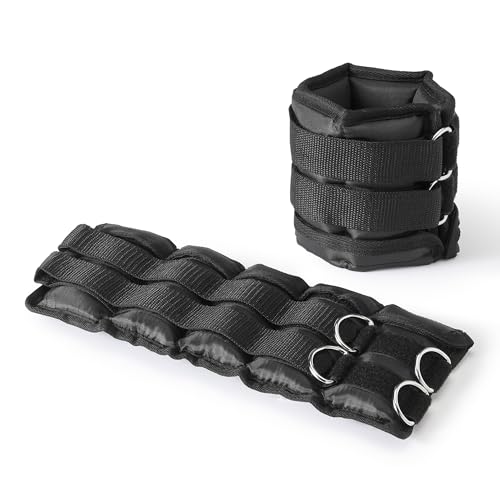
- Adjusts from 0.5-2.5 lb per ankle
- Removable inserts for gradual progression
- Dual Velcro closure system
Best For: Light workouts, walking, and rehabilitation
Best Adjustable Resistance

- Five removable 0.5-pound bags per pack
- Soft, moisture-absorbing cotton construction
- Adjustable strap fits most ankles
Best For: Gradual resistance changes for fitness and physical therapy
Best Compact Design
Sportneer Adjustable Ankle Weights

- Adjusts from 1–5 pounds per ankle
- Compact high-density iron-sand filling
- Quick changes with built-in handles
Best For: Compact, versatile training for fitness and rehabilitation
Best Non-Bulky Fit
BAGAIL Ankle and Wrist Weights

- Sleek three-layer Lycra-SBR fabric
- Secure Velcro and metal-ring closure
- Available in multiple weight tiers
Best For: Walking, Pilates, and ankle-or-wrist training
Best Customizable Starter Pair
Adjustable 1–10 lb Ankle Weights

- Five removable 1-pound bags per side
- Soft, moisture-absorbing cotton construction
- Adjustable strap for ankles and other limbs
Best For: Beginners, general fitness, and physical therapy
Best Overall Range – Sportneer 2-10 lb Adjustable Ankle Weights
These adjustable ankle weights offer a broad 2-10-pound pair range, making them a flexible choice for gradually increasing resistance during walking, running, Pilates, home workouts, and physical therapy. Each weight uses five removable 1-pound iron-sand bags, while the neoprene construction and long hook-and-loop straps are designed for comfort and stability.
Best For: Shoppers who want the widest stated weight range and adjustable resistance for progressive training or rehabilitation.
Pros:
- Adjusts from 1-5 pounds per ankle, or 2-10 pounds per pair.
- Soft, breathable neoprene with moisture-absorbing interior material.
- Long straps and a metal D-ring help provide a secure fit.
Cons:
- Fits ankle circumferences from 7.5 to 12.5 inches, so measuring is important.
- The maximum setting may feel too heavy for some users or exercises.
Sportneer’s removable-bag design makes this a versatile pick if you expect your training needs to change. Confirm the fit before buying, especially if you plan to use the weights on your wrists.
Best Compact Heavy Set – APEXUP Modular Ankle Weights
APEXUP adjustable ankle weights provide five 1-pound modules in each weight, allowing resistance from 1 to 5 pounds per ankle. Their compact iron-sand-filled design, breathable neoprene sleeves, and adjustable Velcro straps suit activities such as walking, running, yoga, aerobics, home workouts, and physical therapy.
Best For: Users who want a compact 10-pound pair with simple 1-pound adjustment steps.
Pros:
- Each ankle weight adjusts from 1 to 5 pounds.
- Compact iron-sand filling helps avoid an unnecessarily bulky profile.
- Designed for varied activities and can also be used as arm weights.
Cons:
- The listed 10-pound pair is the heaviest option in this roundup.
- Fit details are less specific than products with stated ankle circumference ranges.
This set is a practical option for shoppers prioritizing a higher maximum load in a modular format. The included pair and 1-pound increments make it straightforward to start light and increase resistance as needed.
Best Midweight Option – Sportneer 2-7 lb Adjustable Ankle Weights
These adjustable ankle weights cover 2-7 pounds per pair, with each ankle weight ranging from 1 to 3.5 pounds through removable 0.6-pound sandbags. Soft neoprene, moisture-absorbing material, extended straps, and a metal D-ring make them suitable for walking, daily training, yoga, home workouts, and physical therapy.
Best For: Beginners and intermediate users who want a moderate resistance range with smaller weight increments.
Pros:
- Adjusts from 1-3.5 pounds per ankle, or 2-7 pounds per pair.
- 0.6-pound removable bags allow more gradual changes than 1-pound modules.
- Designed to fit ankle and wrist sizes from 7 to 11 inches.
Cons:
- The 7-pound pair maximum is lower than the heavier options in this roundup.
- The stated fit range is narrower than the other Sportneer model.
Choose this pair if you want controlled, moderate resistance rather than a heavy maximum load. Its smaller increments may be useful when building up gradually or adjusting the challenge for different exercises.
Best for Light Training – Amazon Basics 5 lb Adjustable Ankle Weights
For lighter resistance, these Amazon Basics adjustable ankle weights provide a 5-pound pair with each weight adjustable from 0.5 to 2.5 pounds. Removable inserts, reinforced stitching, a polyester exterior, and dual Velcro closures make them suited to walking, jogging, strength training, aerobics, home workouts, and rehabilitation.
Best For: Light resistance work, beginners, walking, and users seeking small 0.5-pound adjustment steps.
Pros:
- Adjusts from 0.5 to 2.5 pounds per ankle.
- Removable inserts support progressive training and rehabilitation.
- Dual Velcro closures are designed to keep the weights in place.
Cons:
- Its 5-pound pair maximum provides less resistance than the other options here.
- There is no supplied ankle circumference range to confirm sizing.
This is the most approachable choice if you need modest resistance for walking, basic workouts, or rehabilitation. The half-pound increments offer a gentler progression, but advanced users may prefer a heavier set.
Best Adjustable Resistance – 1–5 lb Removable-Weight Pair
These adjustable ankle weights use removable 0.5-pound sandbags to let you fine-tune resistance from 1 to 5 pounds per pair. The cotton-and-moisture-absorbing construction, adjustable hook-and-loop strap, and one-size-fits-most design make them a practical option for home workouts, walking, aerobics, or physical therapy.
Best For: Beginners and experienced users who want incremental resistance adjustments for general fitness or rehabilitation exercises.
Pros:
- Five removable 0.5-pound bags in each pack allow adjustable resistance.
- Soft, breathable, moisture-absorbing material is designed for comfortable wear.
- Adjustable strap provides a snug fit on most ankles and can also be used on wrists, arms, or legs.
- Compact and portable for studio, office, home, or travel use.
Cons:
- The pair adjusts only up to 5 pounds total.
- Removable weight bags require extra handling when changing resistance.
Choose this pair if gradual, small resistance increases matter more than maximum loading. Its broad exercise and physical-therapy positioning makes it especially flexible for users with changing training needs.
Best Compact Design – Sportneer Adjustable Ankle Weights
Sportneer’s adjustable ankle weights offer 1–5 pounds per side, or 2–10 pounds per pair, with built-in handles and removable weight bags for quick changes. Their compact high-density iron-sand filling keeps the resistance close to the ankle, while soft padding and adjustable straps support comfortable movement.
Best For: Users who want compact adjustable ankle weights for walking, running, Pilates, yoga, strength training, or rehabilitation.
Pros:
- Built-in handles and removable bags make resistance changes quick.
- High-density filling provides a compact design that fits close to the ankle.
- Double-layer inner bags help reduce leakage and protect against moisture.
- Soft padding and adjustable straps help keep the weights secure during movement.
Cons:
- The maximum listed load is 5 pounds per ankle.
- The design is also listed for wrist use, so users should check fit for their intended application.
This is a strong all-around choice when a compact profile and fast adjustments are priorities. Its resistance range also accommodates both lighter everyday workouts and more demanding lower-body training.
Best Non-Bulky Fit – BAGAIL Ankle and Wrist Weights
BAGAIL’s adjustable ankle weights are designed with three-layer Lycra-SBR fabric, high-tension Velcro, and a metal ring for a sleek, secure fit. Available in multiple weight tiers, they can be used as ankle or wrist weights for walking, running, Pilates, strength training, physical therapy, and other targeted exercises.
Best For: People seeking a non-bulky pair that can move between ankle and wrist workouts.
Pros:
- Non-bulky, sweat-resistant fabric is designed to reduce chafing.
- Iron-sand fill provides consistent weight distribution.
- High-tension Velcro and a metal ring help minimize shifting during movement.
- Multiple weight options support different training levels.
Cons:
- Hand-wash-only care may require extra maintenance.
- Fit depends on measuring ankle or wrist circumference and consulting the size chart.
- The supplied details list a 1-pound-per-side version, so buyers should confirm the selected weight tier.
This pair stands out for users who dislike bulky equipment or want one set for both arm and leg exercises. Measure carefully before ordering, then select the weight tier that matches your routine.
Best Customizable Starter Pair – Adjustable 1–10 lb Ankle Weights
These adjustable ankle weights use five removable 1-pound sandbags per side, letting you set the pair from 1 to 10 pounds. The cotton construction, moisture-absorbing interior, and adjustable hook-and-loop strap make them a practical choice for walking, jogging, aerobics, strength training, or physical therapy.
Best For: Beginners and general-purpose home, gym, or rehabilitation workouts that benefit from incremental weight changes.
Pros:
- Removable weights provide multiple resistance settings.
- Soft, breathable mercerized cotton helps manage moisture.
- Adjustable strap is designed to fit most ankles and can also be used on wrists, arms, or legs.
- Compact and easy to carry for home, studio, office, or travel use.
Cons:
- The pair tops out at 10 pounds total, which may not suit advanced users seeking heavier resistance.
- Individual sandbags must be removed or added when changing the load.
With straightforward adjustment and a broad range of intended uses, this pair is a versatile entry-level option for gradually adding resistance to lower-body and rehabilitation routines.
Best Low-Profile Heavy-Duty Design – Adjustable 1–8 lb Ankle Weights
For shoppers comparing adjustable ankle weights with a slimmer profile, this pair uses detachable steel plates and supports stepless adjustment from 1 to 8 pounds per pair. Its dual-ring and hook-and-loop closure, 5mm neoprene padding, and compact 6.3-inch height are designed for a secure, less bulky fit during varied workouts.
Best For: Users who want compact ankle weights for walking, running, yoga, gym training, rehabilitation, or aquatic exercise.
Pros:
- Detachable steel plates allow gradual weight adjustment without buying multiple sets.
- Dual fixation helps limit slipping and rotation during movement.
- 5mm neoprene padding separates the plates from the ankle and shin.
- Waterproof, wear-resistant, removable, and hand-washable cover.
Cons:
- The pair’s listed adjustment range ends at 8 pounds total.
- Plate-based construction may feel less flexible than sand-filled designs.
- Hand washing is required for care.
This is a strong fit when a low-profile design and stable plate system matter more than maximum total weight, especially for users moving between cardio, yoga, rehabilitation, and water-based training.
Best Multi-Use Cotton Set – Henkelion Adjustable Ankle and Wrist Weights
These Henkelion adjustable ankle weights use separable weight bags and Velcro closures so you can change the resistance for running, gymnastics, aerobics, or strength work. The elongated mercerized-cotton design is intended for both ankles and wrists, while reflective strips add visibility for evening activities.
Best For: Adults, children, and fitness users seeking one adjustable pair for ankle and wrist exercises.
Pros:
- Separable bags make the resistance adjustable.
- Mercerized cotton is soft, breathable, and moisture-absorbing.
- Elongated shape is designed for use on both ankles and wrists.
- Reflective strips support visibility during evening exercise.
Cons:
- The listed 5-pound-per-side configuration may be less suitable for users wanting a lighter or heavier maximum load.
- Changing resistance requires handling multiple individual bags.
The combination of adjustable bags, wrist-and-ankle compatibility, and reflective detailing makes this a flexible choice for family fitness and varied indoor or outdoor routines.
How We Picked the Best Adjustable Ankle Weights
We focused on products that offer removable weights or modular resistance, since adjustability is the main advantage over fixed ankle weights. We also considered listed weight ranges, pair configurations, strap design, intended activities, and versatility for home workouts, walking, aerobics, and rehabilitation exercises.
Because fit and comfort can vary by user, product descriptions should be checked carefully for the weight per pair versus per ankle, fastening system, dimensions, and maximum load. A broad range is useful, but only if the weights remain secure and comfortable during movement.
Quick Comparison
| Best For | What to Look For |
|---|---|
| Beginners | Low starting resistance and simple removable inserts |
| Progressive strength training | A wide adjustment range with clearly marked increments |
| Walking and aerobics | Secure straps, balanced weight distribution, and a comfortable fit |
| Physical therapy | Very light settings and easy, precise adjustments |
| Multi-purpose training | Designs that can also be worn on the wrists, if appropriate |
Key Buying Factors for Adjustable Ankle Weights
Weight Range and Increments
Choose a set that starts light enough for controlled movement and increases gradually as your strength improves. Heavier options are not automatically better; excessive resistance can change your gait or place unnecessary stress on joints.
Fit and Adjustability
Look for secure hook-and-loop closures, straps that stay in place, and a shape that does not dig into the ankle. Confirm whether the advertised weight applies to the pair or to each individual weight.
Comfort and Stability
Padding, even weight distribution, and a low-profile design matter during walking, leg raises, and floor exercises. Weights that shift can reduce exercise control and create discomfort.
Versatility
Some sets are marketed for ankles and wrists, while others are intended mainly for lower-body work. If you want one set for several activities, verify that the fastening system and total weight are suitable for both uses.
Who Should Buy Which Adjustable Ankle Weights?
Beginners and casual walkers: Start with a lighter set and a straightforward adjustment system. You will have more control and can build tolerance safely.
Experienced exercisers: Choose a wider weight range if you plan to progress through strength circuits, leg exercises, or aerobics.
Rehabilitation users: Prioritize light increments, stability, and professional guidance. Ankle weights are not appropriate for every injury or gait issue.
Versatility-focused buyers: Consider a wrist-and-ankle design, but use it only for exercises the manufacturer and your healthcare professional consider suitable.
Whichever model you choose, begin with a manageable load, maintain controlled form, and stop if you experience pain, numbness, or unusual joint strain.